Monday, 20 May 2013

Openness and Sharing


Photo Credit: @superamit via Compfight cc

     Lately I have been thinking of what does it mean to be an open educator.  One of the reasons is because a group of educators called The Fellowship of the Open Spokes, which I am a part of, has been discussing this very topic.  The other reason is because most of this school year I have been thinking about ways to make my colleagues at school share what they are doing in their classrooms. 

What does “open” mean?


Some people take it to mean being open on-line and blogging about your practice and sharing your successes and asking for feedback from colleagues about how you can do things better.  To me it starts as simply as sharing in your school and inviting colleagues into your classroom to see what you are doing and starting conversations about educational practices.  I don’t mean talk about just the “techie” things you do.  I mean talk about that great art lesson or math project.  I know a lot of teachers feel that their “techie” colleagues only value ideas using technology.  We need to celebrate all kinds of learning and teaching, even by sharing our failures so that we can learn from our mistakes. 

Open also means sharing resources on-line, using creative commons and allowing your work to be re-mixed as Sheri Edwards discusses here. 

You might not know it but you already are an open educator if you are using such curating tools as Pinterest.  You are creating boards that can be viewed by others and putting resources together to be used, whether for work or pleasure.

Some reasons people are hesitant to share. 


I have nothing important to share. What if it isn’t good enough?
The following video, "Obvious to You, Amazing to Others," is your answer.


This is my idea and I do it every year. 
Sharing is reciprocal and you will get many more ideas if you share yours.

I feel exposed and vulnerable. 
I’ve been there.  I have felt like that and I sometimes still feel like that and all I can say is that the feeling starts to fade after you see the rewards of sharing. 

Why it is important to share and be open.

Photo Credit: cbucky via Compfight cc


So we can learn from each other.  There is no original idea.  Everything comes from somewhere, some inspiration or a re-mix of something else. Every little bit that everyone contributes can be changed and made into something new. 

The collective is stronger than the individual. Two heads are better than one so think of the power of many. 

We need to practice what we teach our students.  If we want them to be collaborating and sharing their ideas then we need to be doing it ourselves as well. 

If we share our successes as well as our mistakes, everyone can learn from them and offer advice on how to improve. 

Things I have done to be an open educator and the rewards for my classroom and myself.


Joining Twitter 
Because of joining Twitter I:

-       began Mystery Skyping – students LOVE it
-       learned about Genius Hour and began it in my classroom
-       joined a global classroom project
-       joined various chats about education
-       learned about lots of other ideas for the classroom
-       followed many links to great articles, talks and books that are shaping me as an educator
-   connected with many educators I would never have met before Twitter
-       joined ETMOOC which taught me so much (read about it here)
    

Blogging 
I began this valuable reflective practice that makes me really think about everything that I do in my classroom

Vlogging  (Video Blogging)
It is similar to the blogging and allowed me to feel connected to a stronger community and receive feedback on my thoughts.  It taught me a lot about what kind of learner I am because I have been forced to share weekly in contrast to blogging, which I could choose not to do.

School team sharing at a district event (Engaging the Digital Learner Dinner Series)
Sharing (along with others from my school) with my own district what kind of learning and teaching is happening in my school showed me there were so many successes to celebrate.   Here is a video about the  Innovative Learning at Woodward Hill Elementary. 


Sharing and sharing online specifically, is not in addition to the work of being an educator.  It is the work. (Ewin McIntosh)


That is a powerful quote and you may disagree with it at first.  In the following video titled, “Sharing: The Moral Imperative” Dean Shareski talks convincingly about how it is true.  (The video is about 25 minutes)


Another place to hear about great stories of openness is Alan Levine’s site,  True Stories of Openness.

I hope you will start to share and be open and make all of us a little better because of it.  I look forward to hearing your stories in being open.  

Wednesday, 24 April 2013

Why Did You Become an Educator? Here's My Answer.


Photo Credit: Krissy.Venosdale via Compfight cc

I went to a wonderful workshop celebrating and encouraging blogging yesterday where I listened to George Couros speak.  I am inspired to write this blogpost because of the question he left for us:  Why did you become an educator? What legacy do you want to leave?


Photo Credit: h.koppdelaney via Compfight cc


Why did I become an educator?
My easy but true answer to this is the standard, “because I love kids.”  That is why I went into education but there is more to it.  Teaching is fulfilling.  Teaching touches on my definition of success.  I don’t measure success by the size of my bank account or the make of the car I drive but by being able to touch and change another human being’s life.  Teaching gives me a chance to do that everyday, (not that it happens every day, mind you, some days are better than others).  I am given the chance to connect with children and help them set and achieve goals, find their passions and truly learn.  When I die, I will be happy because I have been lucky enough to have had the chance to do what I love, work with children and make positive connections.  


Another reason that I became an educator is because I had a positive experience as a student and I want to pass that along to my students.  There are some teachers who stand out clearly in my mind because of how they influenced who I became.  My grade five teacher, Mr. Dave Plottel, inspired me to become a teacher because he made learning fun.  One of the projects he did was a form of digital storytelling way back in 1984.  He set up a camcorder at the back of his classroom that was used to create short animations.  We created a cartoon flipbook on paper that we took still shots of and then turned into little animated cartoons.  It was soooo cool for a 10 year old.  We were taught in an “open area” where he and a grade 4 teacher team taught our two classes.  He was amazing, so ahead of his time and he is one of the reasons I became an educator.

The last but most important reason I became an educator is because my parents valued education and instilled in me a love of education.  My mother has less than a grade four education.  My father left school at 13 to help with the family farm and my grandparents didn’t even go to school themselves but my parents valued education as a way to a better life.  Being immigrants and not strong English speakers they relied on me to be their translator throughout my childhood.  Despite this, they attended every parent teacher conference even though I had to translate what my teacher was saying. (Hmm….the opportunities I had to embellish the truth…)  I am hoping that I can pass on this love of education to my own children.  

What legacy do I want to leave?

That is simple: For my students and others around me to love learning, to stay curious, to ask good questions and to be courageous enough to find the answers to the questions that they ask. 

Photo Credit: Krissy.Venosdale via Compfight cc

Tuesday, 26 March 2013

See You Later Alligator... My ETMOOC Learning Summary


Photo Credit: pfala via Compfight cc


     You know that feeling you have as a kid on Labour Day when your whole summer vacation is over?  Well that is how I feel, except it is not a vacation that I am beginning to miss.  Quite the opposite, it is a whole lot of learning that just happened in the last 10 weeks.

     It was 10 short weeks ago that the adventure began.  And what an adventure it was.  I saw a tweet by someone at 11:00 pm on January 12th about ETMOOC and I signed up and etmooc began the very next day.  I’m glad I didn’t think when I signed up because I had a whole lot of thinking ahead of me. 

What I learned:

Photo Credit: Marc_Smith via Compfight cc
1. ETMOOC is a great place to learn and to be connected to other educators but it doesn’t have to end here.  As we learned with Dave Cormier when he talked about rhizomatic learning,  we are all nodes in a great big growing, organic connection and the learning and creation of knowledge will continue well past ETMOOC.

2.  We need to know who owns our information on-line and we need to be well-Googled.  I’m still pondering the questions “Is anything completely free on-line?  What are the hidden costs?”

3.  Blogs are a great place for reflective learning for students and teachers.  Commenting on other people’s blogs is an important part in learning from them.  I learned so much from Sue Waters.

4.  Everyone has a story to tell and there are amazing tools to help you tell these stories.  Alan Levine's (@cogdog) storytelling tools wiki  is an amazing resource.

5.  Use copyright free materials and give credit for it. (Creative CommonsCompFight etc)

6.  We create who we are.   Your digital identity needs to be managed to convey what you want to say about yourself.  Naively, I am on-line, who I am in person, just a little more guarded about my personal information. 
                        
My successes:

I started to blog.
I participated in twitter chats.
I created a Google account and started some Google Circles.
I used digital storytelling tools such as: Haiku Deck, Glogster, iMovie,  Five Card Flickr, and Animoto to name just a few.
I began to curate my learning.  
I listened to and learned from most of the
Blackboard Collaborate sessions.

Photo Credit: courosa via Compfight cc 

My failures or “I am still working on…”

I did not make strong connections because I still have one foot in the lurker stage of digital participation.
I did not read very many blog posts because the sheer number on the ETMOOC blog hub overwhelmed me. 
I did not respond to as many blog posts as I should have. 
I did not use Google circles effectively to connect with others.

My Biggest Learning

Strangely enough, my most recent take-away from etmooc seems very powerful to me.  In the last session with Bonnie Stewart (@bonstewart), a few people mentioned in the chat that they felt like a fraud.  That resonated with me because that feeling has been with me since I started this course and I especially felt it when I began talking about what I was learning with my colleagues.  They seemed to be impressed with my learning and I just felt like a great big fake.  “I’m not that smart,” I kept thinking to myself.  I remember watching a TED talk by Amy Cuddy called "Your Body Language Shapes Who You Are," and in it she states that, “you fake it till you make it.”  You become what you act like.  So, at the moment, I may think that I am only acting as if I am knowledgeable but I am slowly becoming the part. 


Amy Cuddy: Your Body Language Shapes Who You Are

Sigh… it  (ETMOOC) was great while it was facilitated, now it will just have to be completely self-directed.  I will miss you ETMOC.   I now feel the need to sing the Kindergarten good-bye song.

Goodbye for now….(I may bump into you on Twitter)
See you later alligator… (maybe I’ll curate your work on Diigo)
Toodle-dee-doo kangaroo…(We may wander into each other on Pinterest)
Time to scat little cat… (maybe we'll see each other on Scoop.it)
It’s the end my friend…(so many possibilities - until next time, my friend :)

Friday, 22 March 2013

Our First Genius Hour Sharing


Photo Credit: K's Photo's via Compfight cc 

     Last week, my students shared their first Genius Hour Projects.  It was a hectic week because it was the last week before Spring Break and there were several other projects happening at the same time.  Everyone had something to share, even if it was to share what didn't work and what they would do next time.  During the sharing time, I was pleasantly surprised to see every student engaged in the presentations.  After each student's presentation, the class asked interesting questions and gave some good feedback to the presenter.

     I learned a lot during the entire process of preparing for and sharing our Genius Hour Learning.   Before beginning the project, students were given this planning sheet.  I went over it with each student before they began their projects.  I will be making some changes to it before using it again.  On the sheet, there is a space for student reflections after each work block.  Unfortunately, because of time constraints, students were unable to write their reflections.  I regret skipping such a crucial step in the students' learning process.  Also, I would not schedule Genius Hour to be done at such a busy time of year where I wasn't able to give entire afternoons to the project.

    Despite all of these bumps in the road, the students enjoyed Genius Hour and so did I.  It was a great learning experience and we will definitely be doing it again. Here is a glimpse into our Genius Hour sharing.


Saturday, 23 February 2013

From Scarcity to Abundance: Genius Hour and a Week of Firsts


Photo Credit: Paco CT via Compfight cc 


Overflowing with abundance.  That is what this week has been.  Not just for myself as a chief learner but for my students as well.  Between professional development for myself, a whole lot of firsts in the classroom, to a magical Genius Hour in the classroom; this has been a memorable week. 

This week I was fortunate enough to listen to a Blackboard Collaborate archived session on Literacies of Attention, Crap Detection, Participation and Collaboration facilitated by Howard Rheingold and a live session on The Challenges and Opportunities of Modern Learning facilitated by Will Richardson (author of Why School?).   As well I listened to Chris Lehmann speak at Engaging the Digital Learner Dinner Series put on my school district.   This is all on top of the normal amount of Twitter chatter that I listen to.  That has been an awful lot of information to assimilate and make sense of.  So, this is what I see from where I am. 

In a time where “Google” has become a verb, technology has redefined the role of the teacher.  We have moved beyond the teacher delivering content to facilitating learning.  We have moved from a time of scarcity of knowledge to one of abundance. Will Richardson convincingly argues that in order for schools to survive, they need to change their role.  Teachers are merely guides in the journey of learning a student takes.  We can show them the tools for learning, and, as Howard Rheingold so eloquently states, teach them “crap detection” so that they can evaluate the validity of what they are learning.  Besides the abundance of information, what other challenges do you think schools today face?  How has your teaching changed because of it?
Photo Credit: bernat... via Compfight cc  

Chris Lehmann talked about how traditionally schools were based on three institutions: the factory system, the prison system, and, surprising to me, the church.  Students were taught the same content in the same way as a factory.  They were not allowed to mingle and converse in the hallways and moved from cell to cell (classroom to classroom) like in a prison and they faced forward in rows and listened to an authority figure like in a church.  This made me reflect on how I am learning currently by participating in ETMOOC.  It is nothing like a factory, prison or church.  This is the style of education that future schools will increasingly engage in:  individualized, without walls, and inquiry driven.


Passion based learning seems to me to be the way to truly teach.   This week, during Genius Hour, my students were so engaged and I felt so fulfilled as a teacher.  It was truly magical what was happening in the classroom.  There was a wide variety of talent.  Students were researching, creating animations, knitting, and drawing.  There were discussions and sharing of learning going on and when it was time to clean up, there was a chorus of “awwww… but we just started.”


I remember when I was a child having to memorize facts to regurgitate for a test and then forgetting them.  I was a good student but I was not learning.  Students need to be engaged in meaningful learning and be allowed to formulate their own questions of inquiry.  Will Richardson states that schools need to move from “delivery” to “discovery”.  And Chris Lehmann said, “Do not deliver instruction.  Pizza can be delivered and then you can buy it and sell it.  Kids need to own their learning.”

A week of abundance.  That has been my students’ experiences this week at school.  It has been an exciting week.  The Spirit Team at our school, which most of my class is a part of and which I sponsor, created anti-bullying videos and was invited to Simon Fraser University to participate in a celebration for those standing up against bullying.  Also, our class’ letters to the editor, that where written to raise awareness about rhinos being endangered, were published.  The most exciting thing of all was the first ever Skype call for my class to Cape Town, South Africa to talk to Karen Stadler, the organizer of the Save Our Rhinos movement.  None of these experiences would have been possible if it had not been for my PLN on Twitter.  I learned about the video contest, Save Our Rhinos and Skype Education on Twitter.  So thank you to my PLN and thank you to technology.  May the abundance continue!


Thursday, 7 February 2013

Digital Storytelling

     This week's theme has been digital storytelling.  I enjoy telling stories.  I enjoy writing them, sharing them, and am interested in using digital methods to tell them.  In the past, I have used Movie Maker to create my family stories but this week I learned about the smorgasbord of tools out there for digital storytelling.  Earlier, during the second week of ETMOOC, I created a HaikuDeck and had a chance to try Animoto.  One simple tool that I enjoyed and could see myself using in the classroom tomorrow is Five Card Flickr Story courtesy of @cogdog.  The following is my poem made using Five Card Flickr.


Five Card Story: Not Enough Minutes

a #etmooc story created by Kooner_j

flickr photo by cogdogblog

Walk me


flickr photo by cogdogblog

Time is short


flickr photo by Henriksent

Feed me


flickr photo by cogdogblog

Run off my feet


flickr photo by debbie.fucoloro

Nodding off at last

Not Enough Minutes
Walk me
Time is short
Feed me
Run off my feet
Nodding off at last


I also wanted to try my hand at a stop motion movie, but because of time constraints, I was not able to do that. However, I have been working with a group of students creating anti-bullying videos for Pink Shirt Day. They will have to do as my digital stories for this week.  I feel like it is a bit of cheating because I am using iMovie but I do promise myself to later on try to create a gif and a stopmotion.  In all honesty, I just learned how to use iMovie two months ago so it is still part of my learning.  Here they are.


I participated in the #etmchat briefly this week (between shuttling my kids to their various activities and trying to find a WiFi hotspot).  There was this very profound tweet:


We need to teach the verbs of storytelling & not just the tech Tech will change tradition of story remains  


It made me think of how the tools always change but stories have continued to be told, whether around the campfire, in a book, over the radio, or on television and now via the internet.  The skill of being able to connect with your audience is the same, using powerful messages and emotions.  I wonder if our students see the similarities between traditional and digital storytelling?  I wonder if one is more important than the other? It is difficult to say at the elementary school level where we are still focusing on some basic literacy skills.  What do you think?


Saturday, 2 February 2013

Rhizomatic Learning


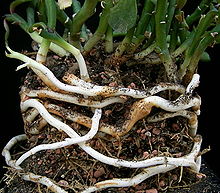
This week I participated in several Blackboard Collaborate Sessions for ETMOOC.  One of them was on rhizomatic learning led by David Cormier.  It was an interesting topic with a rich discussion.  As I listened to the conversation, I thought of my overgrown garden which is year by year being invaded by strawberry and mint plants, which are rhizome plants.  The roots of a rhizome grow laterally and it can propagate anywhere.  David was proposing that learning needs to be rhizomatic, especially with the use of collaborative learning communities on-line.

His 5 key points were:

- the best teaching prepares people for dealing with uncertainty
- the community can be the curriculum - learning when there is no answer
- the rhizome is a model for learning for uncertainty
- rhizomatic learning works in the complex domain
- we need to make students responsible for their own learning (and the learning of others)

It was a very interesting discussion, but the piece that resonated with me the most was that we need to make students responsible for their own learning.  I connected with this because I have been trying to learn more about and to implement Genius Hour in my classroom.  Genius Hour is self directed passion based learning.  Many teachers in our district and all over North America have been successfully implementing this kind of learning/teaching in their classrooms.  A high school, Fraser Heights Secondary, in our district even has a new elective course that students can take for credit that is based on Genius Hour.  (For more information on Genius Hour you can visit the Genius Hour wiki.)

David discussed how this kind of teaching can't be used to teach the basics such as the multiplication tables.  In elementary school, when we are trying to teach so many basic skills it can sometimes be difficult to use an open syllabus and begin teaching students how to take responsibility for their own learning.  However, if we make that leap into putting students into the driver's seat of their own learning, where they can choose what they learn and how they share their learning, the rewards can be amazing.

My own experiences with self-directed study as a student left me with mixed feelings.  I was given the opportunity to choose what I wanted to learn when I took part in the TLITE (Teaching and Learning in an Information Technology Environment) Program at Simon Fraser University.  I felt confused with this new found freedom to choose.  I missed the comfort and familiarity of being told what to learn and how to show my learning.  I wanted a set syllabus and I wanted to know what hoops I needed to jump through to finish the program.  However, with some guidance, I eventually created my own projects and reflected on my learning.  It was tailored to my needs and enriched my program in my classroom.  Now, taking part in ETMOOC, I am excited to drive my own learning and to go where I wish with my learning plan.  Finally, I have a label for it too: Rhizomatic Learning.

(Now, I have a newfound respect for the strawberry and mint in my garden, those industrious little rhizome plants.)