Wednesday, 16 October 2013

How Do We Know We Are Doing a Good Job?


Photo Credit: seeveeaar via Compfight cc 


At the start of this school year, I had a rude awakening.  After carefully working with my colleagues to work out the division of our classes, I found some students who were not happy with their placements, which is not that unusual.  One student in particular stands out for me.  He was in my class the previous year and had seemed to have had a wonderful time learning in our classroom.  He provided positive feedback to me at the end of the year.  I had my students write anonymous report cards on myself and my job-share partner at the end of the year and they were very positive.  However, at the start of this year, that one student had a conversation with my job-share partner where he reluctantly shared that his parents did not want him in our class because they did not think we were good teachers.  Gasp! Break my heart!  We work so hard at trying to be good teachers that this caused me to rack my brains to find what it could be that my job share partner and I needed to do better.  After a while, I tried to brush it off by saying to myself that I can't please everyone, but it still bothered me.
Photo Credit: theunquietlibrarian via Compfight cc

Eventually, I understood that our classroom is unconventional in many ways and that it causes some parents to be uncomfortable because they don't see learning happening in a traditional way.  Last year, my teaching was transformed by my own learning and professional development and I tried many new things in my classroom.  But now,  I started to ask myself: Do I need to use the textbook more?  Maybe we should do more worksheets.  Perhaps I need to go back to the weekly spelling list so that some parents feel like we are actually teaching.  But, would that weekly spelling list have been teaching?  That led me to ask: If we compare out education system to a business model, who are our customers?  Is it the students?  Is it the parents?  Or a combination of the two? Who should I be trying to please?  Am I supposed to be pleasing someone? Yes, my students need to be happy in order to learn but what about the parents?  I want them to feel like their children are getting a good education and I need to communicate what I am doing and why I am doing it, but what if we disagree? If you have answers to any of these questions, I would love to hear from you.


After much soul searching, I came to a place of peace.  I happened to be discussing why that student didn't want to be in my class and what I was doing wrong with a teacher friend in a restaurant.  While I was having this discussion, the waitress came to take our order and recognized me as her 5th grade teacher.  She then starts to animatedly discuss all of the things she remembered in our classroom.  How we had a Mystery Festival for Science, an Author's Evening to share our writing, and how we discussed the tragedy of 9/11 when it occurred and how that conversation stayed with her.  She showed me the power of teaching and how it is remembered far into the future.  It was exactly the validation I needed to know that I can continue to teach in a way that I am passionate about because the students remember it and learn from it.

So, how do you know that you are doing a good job?

Sunday, 25 August 2013

What I Learned From Books This Summer

Photo Credit: the bbp via Compfight cc 

This summer I have been doing quite a bit of reading.  I love reading and enjoy the feel of pages between my fingers when I know something I'm reading is really good.  I belong to two book clubs (one just finished reading Many Lives, Many Masters, by Brian L. Weiss and the other just finished The Kitchen House by Kathleen Grisson).  I've been reading The Harry Potter series to my younger son.  In between all of the social reading, I've been trying to read what my students would be interested in.  For The Global Read Aloud, I just finished "Out of My Mind," by Sharon M. Draper.  It is an amazing book, a must-read in the classroom.

For professional growth, I read the following books:

If You Can't Fail, It Doesn't Count
I am going to share the ideas in this book with my class.  This is a celebration of failure.  In it, we meet famous people who failed and whose failure was directly related to their success. It emphasizes that everyone's ideas are important and that failure is a step towards success. 


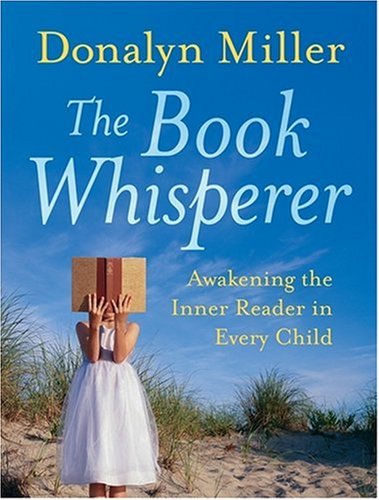
A colleague recommended The Book Whisperer, by Donalyn Miller.  It is about how to get kids to read in your classroom.  It made a lot of sense to me.  The author's reading program consists of individual choice and building a classroom library of high-interest books. The author recommends that students be given ample time to read what they choose, instead of having a book chosen for the class to "study". Books need to be for enjoyment and students need to feel a connection to the book in order to read it. She goes on to show how she encourages students to read a variety of genres and to share what they have read with the class.  Miller's students are all at different reading levels just like every classroom but they end up, on average, reading 40 books per school year, a remarkable achievement.

In my school, several intermediate teachers have read this book and have teamed up to share all of our books in order to offer even more choice to our students.  The pod outside our doors will be furnished with low bookshelves, which will house our shared collection of books.  The sign out system for the books will be an honour system. I am excited to see how reading will shape up this year.  When I shared this reading program idea with my son, he said, "You get to read whatever you want? That's awesome!" There is a lot more information on how to set up this program in the book, from lists of recommended book to have in your classroom to student forms.


The Daily 5 Fostering Literacy Independence in the Elementary Grades, was also a recommendation. It ties in nicely to the choice reading, which is central to "The Book Whisperer." It gives a time for students to read and write and to have a menu of activities to choose from.  It shows that management issues can be minimized when the locus of control is given to students.


Words Their Way; Word Study for Phonics, Vocabulary, and Spelling Instruction
Four words: Great ideas, tough read. This is a series of books. The first book explains the program and the books that follow contain activities and materials for students.  The first book is a very practical book because it lays out how to group students by ability for word study.  The difficulty is that it is a not user-friendly because of the amount of text and technical language (example: "the derivational relations stage for advanced readers and writers").  The supplementary books provide activities that can be done all week in order to sort words and recognize patterns.  I am going to be using this program in the fall in conjunction with The Daily 5 activities.


Embedded Formative Assessment
What a great book!  It strikes a nice balance between providing examples of research and why formative assessment is important and practical ideas I can take to my classroom and begin using right away.  Dylan William provides over 50 techniques for formative assessment with examples of how they have been used in other classrooms.  He also discusses the importance of and gives examples of thoughtful feedback, cooperative learning and self-regulated learning.  I am so glad to have read this book because I can begin using its ideas right away and it meshes with my philosophy of teaching.

I've been reading and thinking all summer and I have so many ideas I want to use in my classroom.  I am going to try my best to put into practice what I have learned.

Monday, 5 August 2013

The Liebster Awards: Recognizing Smaller Blogs


Thank you Sherri Edwards at What Else for sharing with me the Liebster Award (Liebster meaning dearest in German).  This is a way to recognize smaller blogs with fewer than 200 followers.  The Liebster nomination rules are:


1        1. Link back to the blog that nominated you.
2. Nominate 5-11 blogs with less than 200 followers. (some places the rules say 3-5 blogs)
3. Answer the questions posted for you by the nominator.
4. Share 11 random facts about you.
5. Create 11 questions for your nominees.
6. Contact your nominees to inform them of their nomination.

My nominees are (and I apologize ahead of time if you have more than 200 blog followers; I couldn’t figure out how to find that information out):

Beverley Bunker at Experiments in Learning
Jeremy Inscho at Inscho in School

 My answers to questions from Sherri, my nominator:

1.  Why do I blog?

I blog in order to be reflective in my practice and to document my learning.  Blogging allows me to share my ideas and to learn from others.  Sometimes it is difficult to blog (like now, in the summer when it feels like my brain is overtaken by my family and not by school) and othertimes, the words write themselves. But each time, I come away from the experience feeling like I learned a little bit more about myself and the kind of teacher I want to be.

2.  What’s the most important thing a teacher can do for his or her student?

I think the most important thing a teacher can do for his or her students is to create a positive relationship with them, respect them and truly listen to what they have to say.  Teaching and learning can only happen when there is mutual respect and trust.  After that , we need to awaken wonder and curiosity and passion, which is why I love Genius Hour. 

3.  What is the most important thing a teacher can do for his or her colleagues?

The most important thing a teacher can do for his or her colleagues is to listen and share.  Listening without judgment and sharing what you do creates a culture of openness. (see previous post)

4.  If you could change one physical thing about your classroom what would it be?

My room is very small and it barely fits 28 desks and a teacher’s desk.  It is also an odd shape.   I would change it to be larger and rectangular.  Then, I could change it to have a designated reading space with a couch and a carpet.  

5.  Describe one of your most memorable teaching experiences.

Well, I’m going to take the word memorable to be mean unforgettable.  A few years back, I took my class on a fieldtrip to the law courts.  It was a most memorable fieldtrip.  We travelled by parent drivers because we did not have funding for a school bus.  The fieldtrip began by one of the cars not arriving at the law courts until 45 minutes after our fieldtrip had begun because the driver had gotten lost.  This was in a time before everyone commonly had cell phones, so I couldn’t even call the driver to find out if they were O.K. Then, while we were in an unused court room having a judge talk to the class, the sheriff walked in and told us we had to remain in the room and not leave.  He proceeded to leave the room with the judge and then locked the door behind him and locked us into the courtroom.  This sent the class into some uproar.  We waited about 40 minutes in the room until the same sheriff came and unlocked the door.  He told the class, “Do not look to your left as you walk through the hallway.”  Of course, the kids did look.  They saw a pool of blood on the floor.  Then as we waited for our rides home, one of our drivers did not come to pick us up and I had to phone the school to have one of the staff come and pick up the last group of students.  That night, as I watched the news, I found that someone had come to the courthouse and shot an attorney.  That was the most unforgettable fieldtrip/teaching moment I ever had. 

6.  What memorable experience do you hope your students will have?

There are two types of experiences that I hope for my students. 

There is something very powerful about connecting with a good book and getting lost in it.  I hope for my students to find that love of a good book.

 I also want them to be able to engage in “flow” in their learning- whether it be in writing, physical education or art.  As Daniel Pink describes in his book, Drive, “in flow, the relationship between what a person had to do and what he could do was perfect. The challenge wasn't too easy. Nor was it too difficult. It was a notch or two beyond his current abilities, which stretched the body and mind in a way that made the effort itself the most delicious reward. That balance produced a degree of focus and satisfaction that easily surpassed other, more quotidian, experiences. In flow, people lived so deeply in the moment, and felt so utterly in control, that their sense of time, place, and even self melted away. They were autonomous, of course. But more than that, they were engaged.” I would like my students to have the memorable experience of that level of engagement. 


7.  How many students/teachers do you have at your school?

We have about 500 students and about 30 teachers.

8.  What is your favourite classroom use of technology?

This is a difficult question because we use it for so many different purposes.  One of my favourite classroom uses of technology is connecting globally with other classrooms either through student blogs or Skype. 

9.  Who/what is your teaching inspiration?

This last year, my main teaching inspiration has been my PLN on twitter.  I learn so much from them and I am in awe of what everyone is doing.  I am also inspired by the books that I read and by my children who amaze me in their learning processes every day. 

10.  What is one teaching goal you have for this year?

I will try to be succinct.  I am going to write an blogpost on this question.  One of the main things I would like to do this year is to inspire a love for reading using the ideas of Donalyn Miller in The Book Whisperer. 

11.  In six words, what is your teaching philosphoy?

Connect and inspire passion and wonder. 

11 Random Facts About Me
     1. I love to read the same book as my son so that I can talk to him about it.
2         2.  I never eat the last bite of my sandwich.
3         3. I don’t drink milk.
4         4. I love camping.
5         5. I’m learning how to swim.
6         6. I joined twitter 11 months ago.
7         7.  I have a wonderful job share partner who I have known since high school.
8         8. My dream as a child was to be a writer.
           9.   I think it is important to meditate every day if possible.
1        10.  Sadly, I’ve never had a pet.
1        11. Every year I get bored and feel a need to somehow change or renovate something in my home. 


11 Questions for my nominees.

1       1.     Why do you blog?
2       2.     What’s the most important thing a teacher can do for his or her students?
3       3.     What’s the most important thing a teacher can do for his or her colleagues?
4       4.     If you could change one physical thing about your classroom what would it be?
5       5.     How many teachers and students are at your school?
6       6.     What is one thing you want your students to have learned in your classroom?
7       7.     Describe one of your most memorable teaching experiences.
8       8.     What is one teaching goal you have had this year?
9       9.     If you weren’t a teacher, what other profession would you have chosen?
1      10. What is your favourite use of technology in your classroom?
1.     11. Describe the biggest teaching you mistake you ever made.

Monday, 20 May 2013

Openness and Sharing


Photo Credit: @superamit via Compfight cc

     Lately I have been thinking of what does it mean to be an open educator.  One of the reasons is because a group of educators called The Fellowship of the Open Spokes, which I am a part of, has been discussing this very topic.  The other reason is because most of this school year I have been thinking about ways to make my colleagues at school share what they are doing in their classrooms. 

What does “open” mean?


Some people take it to mean being open on-line and blogging about your practice and sharing your successes and asking for feedback from colleagues about how you can do things better.  To me it starts as simply as sharing in your school and inviting colleagues into your classroom to see what you are doing and starting conversations about educational practices.  I don’t mean talk about just the “techie” things you do.  I mean talk about that great art lesson or math project.  I know a lot of teachers feel that their “techie” colleagues only value ideas using technology.  We need to celebrate all kinds of learning and teaching, even by sharing our failures so that we can learn from our mistakes. 

Open also means sharing resources on-line, using creative commons and allowing your work to be re-mixed as Sheri Edwards discusses here. 

You might not know it but you already are an open educator if you are using such curating tools as Pinterest.  You are creating boards that can be viewed by others and putting resources together to be used, whether for work or pleasure.

Some reasons people are hesitant to share. 


I have nothing important to share. What if it isn’t good enough?
The following video, "Obvious to You, Amazing to Others," is your answer.


This is my idea and I do it every year. 
Sharing is reciprocal and you will get many more ideas if you share yours.

I feel exposed and vulnerable. 
I’ve been there.  I have felt like that and I sometimes still feel like that and all I can say is that the feeling starts to fade after you see the rewards of sharing. 

Why it is important to share and be open.

Photo Credit: cbucky via Compfight cc


So we can learn from each other.  There is no original idea.  Everything comes from somewhere, some inspiration or a re-mix of something else. Every little bit that everyone contributes can be changed and made into something new. 

The collective is stronger than the individual. Two heads are better than one so think of the power of many. 

We need to practice what we teach our students.  If we want them to be collaborating and sharing their ideas then we need to be doing it ourselves as well. 

If we share our successes as well as our mistakes, everyone can learn from them and offer advice on how to improve. 

Things I have done to be an open educator and the rewards for my classroom and myself.


Joining Twitter 
Because of joining Twitter I:

-       began Mystery Skyping – students LOVE it
-       learned about Genius Hour and began it in my classroom
-       joined a global classroom project
-       joined various chats about education
-       learned about lots of other ideas for the classroom
-       followed many links to great articles, talks and books that are shaping me as an educator
-   connected with many educators I would never have met before Twitter
-       joined ETMOOC which taught me so much (read about it here)
    

Blogging 
I began this valuable reflective practice that makes me really think about everything that I do in my classroom

Vlogging  (Video Blogging)
It is similar to the blogging and allowed me to feel connected to a stronger community and receive feedback on my thoughts.  It taught me a lot about what kind of learner I am because I have been forced to share weekly in contrast to blogging, which I could choose not to do.

School team sharing at a district event (Engaging the Digital Learner Dinner Series)
Sharing (along with others from my school) with my own district what kind of learning and teaching is happening in my school showed me there were so many successes to celebrate.   Here is a video about the  Innovative Learning at Woodward Hill Elementary. 


Sharing and sharing online specifically, is not in addition to the work of being an educator.  It is the work. (Ewin McIntosh)


That is a powerful quote and you may disagree with it at first.  In the following video titled, “Sharing: The Moral Imperative” Dean Shareski talks convincingly about how it is true.  (The video is about 25 minutes)


Another place to hear about great stories of openness is Alan Levine’s site,  True Stories of Openness.

I hope you will start to share and be open and make all of us a little better because of it.  I look forward to hearing your stories in being open.  

Wednesday, 24 April 2013

Why Did You Become an Educator? Here's My Answer.


Photo Credit: Krissy.Venosdale via Compfight cc

I went to a wonderful workshop celebrating and encouraging blogging yesterday where I listened to George Couros speak.  I am inspired to write this blogpost because of the question he left for us:  Why did you become an educator? What legacy do you want to leave?


Photo Credit: h.koppdelaney via Compfight cc


Why did I become an educator?
My easy but true answer to this is the standard, “because I love kids.”  That is why I went into education but there is more to it.  Teaching is fulfilling.  Teaching touches on my definition of success.  I don’t measure success by the size of my bank account or the make of the car I drive but by being able to touch and change another human being’s life.  Teaching gives me a chance to do that everyday, (not that it happens every day, mind you, some days are better than others).  I am given the chance to connect with children and help them set and achieve goals, find their passions and truly learn.  When I die, I will be happy because I have been lucky enough to have had the chance to do what I love, work with children and make positive connections.  


Another reason that I became an educator is because I had a positive experience as a student and I want to pass that along to my students.  There are some teachers who stand out clearly in my mind because of how they influenced who I became.  My grade five teacher, Mr. Dave Plottel, inspired me to become a teacher because he made learning fun.  One of the projects he did was a form of digital storytelling way back in 1984.  He set up a camcorder at the back of his classroom that was used to create short animations.  We created a cartoon flipbook on paper that we took still shots of and then turned into little animated cartoons.  It was soooo cool for a 10 year old.  We were taught in an “open area” where he and a grade 4 teacher team taught our two classes.  He was amazing, so ahead of his time and he is one of the reasons I became an educator.

The last but most important reason I became an educator is because my parents valued education and instilled in me a love of education.  My mother has less than a grade four education.  My father left school at 13 to help with the family farm and my grandparents didn’t even go to school themselves but my parents valued education as a way to a better life.  Being immigrants and not strong English speakers they relied on me to be their translator throughout my childhood.  Despite this, they attended every parent teacher conference even though I had to translate what my teacher was saying. (Hmm….the opportunities I had to embellish the truth…)  I am hoping that I can pass on this love of education to my own children.  

What legacy do I want to leave?

That is simple: For my students and others around me to love learning, to stay curious, to ask good questions and to be courageous enough to find the answers to the questions that they ask. 

Photo Credit: Krissy.Venosdale via Compfight cc

Tuesday, 26 March 2013

See You Later Alligator... My ETMOOC Learning Summary


Photo Credit: pfala via Compfight cc


     You know that feeling you have as a kid on Labour Day when your whole summer vacation is over?  Well that is how I feel, except it is not a vacation that I am beginning to miss.  Quite the opposite, it is a whole lot of learning that just happened in the last 10 weeks.

     It was 10 short weeks ago that the adventure began.  And what an adventure it was.  I saw a tweet by someone at 11:00 pm on January 12th about ETMOOC and I signed up and etmooc began the very next day.  I’m glad I didn’t think when I signed up because I had a whole lot of thinking ahead of me. 

What I learned:

Photo Credit: Marc_Smith via Compfight cc
1. ETMOOC is a great place to learn and to be connected to other educators but it doesn’t have to end here.  As we learned with Dave Cormier when he talked about rhizomatic learning,  we are all nodes in a great big growing, organic connection and the learning and creation of knowledge will continue well past ETMOOC.

2.  We need to know who owns our information on-line and we need to be well-Googled.  I’m still pondering the questions “Is anything completely free on-line?  What are the hidden costs?”

3.  Blogs are a great place for reflective learning for students and teachers.  Commenting on other people’s blogs is an important part in learning from them.  I learned so much from Sue Waters.

4.  Everyone has a story to tell and there are amazing tools to help you tell these stories.  Alan Levine's (@cogdog) storytelling tools wiki  is an amazing resource.

5.  Use copyright free materials and give credit for it. (Creative CommonsCompFight etc)

6.  We create who we are.   Your digital identity needs to be managed to convey what you want to say about yourself.  Naively, I am on-line, who I am in person, just a little more guarded about my personal information. 
                        
My successes:

I started to blog.
I participated in twitter chats.
I created a Google account and started some Google Circles.
I used digital storytelling tools such as: Haiku Deck, Glogster, iMovie,  Five Card Flickr, and Animoto to name just a few.
I began to curate my learning.  
I listened to and learned from most of the
Blackboard Collaborate sessions.

Photo Credit: courosa via Compfight cc 

My failures or “I am still working on…”

I did not make strong connections because I still have one foot in the lurker stage of digital participation.
I did not read very many blog posts because the sheer number on the ETMOOC blog hub overwhelmed me. 
I did not respond to as many blog posts as I should have. 
I did not use Google circles effectively to connect with others.

My Biggest Learning

Strangely enough, my most recent take-away from etmooc seems very powerful to me.  In the last session with Bonnie Stewart (@bonstewart), a few people mentioned in the chat that they felt like a fraud.  That resonated with me because that feeling has been with me since I started this course and I especially felt it when I began talking about what I was learning with my colleagues.  They seemed to be impressed with my learning and I just felt like a great big fake.  “I’m not that smart,” I kept thinking to myself.  I remember watching a TED talk by Amy Cuddy called "Your Body Language Shapes Who You Are," and in it she states that, “you fake it till you make it.”  You become what you act like.  So, at the moment, I may think that I am only acting as if I am knowledgeable but I am slowly becoming the part. 


Amy Cuddy: Your Body Language Shapes Who You Are

Sigh… it  (ETMOOC) was great while it was facilitated, now it will just have to be completely self-directed.  I will miss you ETMOC.   I now feel the need to sing the Kindergarten good-bye song.

Goodbye for now….(I may bump into you on Twitter)
See you later alligator… (maybe I’ll curate your work on Diigo)
Toodle-dee-doo kangaroo…(We may wander into each other on Pinterest)
Time to scat little cat… (maybe we'll see each other on Scoop.it)
It’s the end my friend…(so many possibilities - until next time, my friend :)

Friday, 22 March 2013

Our First Genius Hour Sharing


Photo Credit: K's Photo's via Compfight cc 

     Last week, my students shared their first Genius Hour Projects.  It was a hectic week because it was the last week before Spring Break and there were several other projects happening at the same time.  Everyone had something to share, even if it was to share what didn't work and what they would do next time.  During the sharing time, I was pleasantly surprised to see every student engaged in the presentations.  After each student's presentation, the class asked interesting questions and gave some good feedback to the presenter.

     I learned a lot during the entire process of preparing for and sharing our Genius Hour Learning.   Before beginning the project, students were given this planning sheet.  I went over it with each student before they began their projects.  I will be making some changes to it before using it again.  On the sheet, there is a space for student reflections after each work block.  Unfortunately, because of time constraints, students were unable to write their reflections.  I regret skipping such a crucial step in the students' learning process.  Also, I would not schedule Genius Hour to be done at such a busy time of year where I wasn't able to give entire afternoons to the project.

    Despite all of these bumps in the road, the students enjoyed Genius Hour and so did I.  It was a great learning experience and we will definitely be doing it again. Here is a glimpse into our Genius Hour sharing.